In the winter, an open fire can be worth its weight in gold. Not only do they help to keep you nice and warm, they also improve the ambience and overall aesthetics of your home’s interior. Then of course, there’s the fact that they give you something nice to look at.
While open fires and multi-fuel stoves are practical and attractive, they aren’t without their risks, and their problems. keeping a fire or stove well maintained isn’t a recommendation, it’s a necessity. This is not only the case for insurance purposes, but more importantly, for health and safety purposes too. One of the hardest aspects of keeping a fire or stove maintained? The chimney.
Chimneys are essential for open fires as they allow the smoke and harmful fumes to be safely exhausted out of your home. If they were to get into your home in large concentrations, this increases the risk of a wide range of health and safety issues, including a fire, or Carbon Monoxide poisoning.
One of the keys to keeping your chimney, and indeed, your roof, in the best possible condition is to keep the chimney flashing in top condition. Here’s a look at how to spot chimney flashing problems before they destroy your roof.
What is Chimney Flashing?
Before we can look at what you can do to keep your roof and chimney in the best possible condition they can be in, we first need to look at chimney flashing. Specifically, we need to understand what it is and how it works.
Chimney flashing, very simply, is a thin layer of waterproof material, usually aluminum, copper, or lead, that is fitted where the chimney attaches to the roof. It’s primary purpose is to securely seal the gap between the two surfaces to ensure that the chimney draws correctly and that rainwater and other detritus is not able to leak into the roof and cause damage.
Chimney flashing comes in many forms and is designed not only to help protect the roof and prevent leaks, but to also provide additional structural integrity and ensure that your home is energy efficient and that your fire or stove functions works as it should.
While chimney flashing may be simple in design, in terms of function, it’s very important. It effectively protects both your roof, and your chimney and if it is damaged, they too may become damaged.
How to Spot Chimney Flashing Problems Before They Destroy Your Roof
If you notice any signs of damage to your chimney or the flashing that surrounds it, it’s essential that you act fast and get any problems taken care of before they can get worse.
Here are several signs of chimney flashing damage, and what you can do to put things right.
Rust or Corrosion
When it comes to spotting chimney flashing problems, your eyes are one of the most useful tools to have at your disposal.
One of the easiest ways of spotting potential problems with the flashing of your chimney is to look out for any visible signs of rust or corrosion. While waterproof materials can be used, sometimes you’ll find that the material has rusted or corroded away.
If you see any visible signs of rust or corrosion, this indicates that the flashing’s integrity has been compromised, meaning it’ll need replacing sooner rather than later.
Water Stains or Water Damage
Another tell-tale sign of perished chimney flashing is when you can spot any visible signs of water damage, or water staining inside the house, especially near the chimney.
Check for damp spots, water staining, or even a smell of damp on and around the chimney. Be sure to check these spots after spells of heavy rain or bad weather. If you notice them getting bigger, or darker, this is a sign that your flashing has failed and is letting in water.
If this is the case, never ignore it as the more rain that is let in, the more damage this could cause to your roof, especially around any wooden joists which may be providing structural support.
Flashing Visibly Pulling Away
If you can visibly see that the flashing is no longer sitting flush between the chimney and your roof, this too is another sign that it’s damaged and will need repairing or replacing.
Examine the flashing and keep a close look out for any bumps or dents to indicate that it may have come loose. If you can get up close, examine where it joins your roof and check the seal, if you can see it has come away, even slightly, it will need sorting as soon as possible. Even the smallest of gaps will allow water to get in, and the more water it allows in, the worse the problem will become.
White Staining on the Brickwork
Examining the brickwork of your chimney is also a very useful thing you can do to ensure that your flashing is in the best condition it can be.
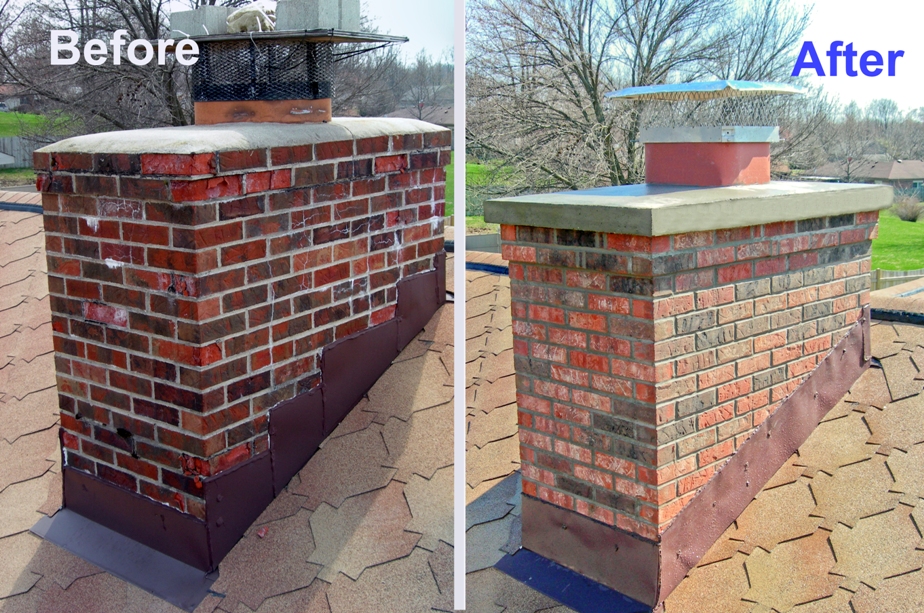
If you can notice a dry, powdery, chalky residue on the brickwork of your chimney, this indicates a problem. Specifically, it indicates a problem with moisture. You see, it is known as efflorescence, and it occurs when moisture is present within the masonry.
While this is not a guarantee that your flashing is faulty, it does indicate that you have a damp or moisture problem in that area somewhere, and that it will need to be taken care of before it damages your roof, walls, or chimney.
Damaged Brickwork
When you examine the chimney and the flashing surrounding it, be sure to examine the brickwork as well and keep a look out for any signs of damaged masonry or brickwork.
If you can see any cracks, chips, or pieces of broken brickwork, the culprit could be water getting in under a perished chimney flashing. This is likely to be worse during the winter, when water gets in, freezes, expands, and damages the brickwork as well as the flashing.